Choosing a school is one of the biggest decisions a parent makes. It’s not just about which building looks nicest or which one is closest to home — it’s about who your child spends most of their waking hours with for years, and what kind of person they become because of it. If you’re a parent in Jamui trying to figure out where to send your child, you’ve probably already realised there’s no single “correct” answer. But there are things worth knowing before you decide, and that’s what this guide is for.
We’ll walk through what actually makes a school good, what to check before you enrol your child anywhere, and where Mani Dweep Academy fits into that picture — based on facts you can verify, not marketing claims you have to take on faith.
There’s no official ranking body that hands out a “Best School” trophy — so when people search for the best school in Jamui, what they’re really asking is: which school will genuinely take care of my child’s learning, safety, and growth? That’s a fair question, and it deserves an honest answer rather than a sales pitch.
A genuinely good school usually has a few things in common. It has a curriculum that’s recognised and respected. It has teachers who stick around and know their students by name, not just by roll number. It has classrooms, labs, and playgrounds that are actually used, not just photographed for a brochure. And it has a track record parents can check for themselves — affiliation numbers, exam results, and a campus you can visit.
Rather than chasing a title, it’s more useful to look at the substance behind it.
Jamui has grown a lot over the past couple of decades, and with that growth has come a real demand for quality education close to home. Families who once had to consider sending children away for a good CBSE education now have more local options — but more options also means more research is needed.
Parents searching for the best school in Jamui are usually weighing a few practical things: Is it CBSE affiliated? Does it go all the way through senior secondary? Is it English medium? Can my child study Science or Commerce here without switching schools later? These are sensible, grounded questions, and any school worth considering should be able to answer them clearly.
Before you shortlist any school — in Jamui or anywhere else — it helps to check:
Visiting in person, if possible, tells you more than any website ever will.
CBSE (Central Board of Secondary Education) is one of the most widely recognised school boards in India. Its curriculum is designed with national-level competitive exams in mind, which matters if your child is likely to sit for exams like JEE or NEET later on. It’s also portable — if your family relocates to another city or state, a CBSE-affiliated school is usually easy to transfer into, because the syllabus stays broadly consistent across the country.
For parents in a growing town like Jamui, a CBSE affiliation is often the first filter applied when shortlisting schools, and reasonably so. You can verify any school’s affiliation status directly through the official CBSE portal — it’s public information, and it’s worth checking rather than taking on trust.
Academic excellence isn’t a slogan — it’s the result of consistent teaching, a properly followed curriculum, and regular assessment. A school that takes this seriously usually has a defined academic calendar, periodic tests rather than just annual exams, and a system for identifying students who are falling behind before it becomes a bigger problem.
It also means offering subject choices that match where students are headed — Science for those aiming at engineering or medicine, Commerce for those interested in business, finance, or law. A school that only offers one stream limits options at exactly the age when options matter most.
Buildings and technology matter, but teachers are what actually shape a classroom. Experienced faculty bring more than subject knowledge — they bring the ability to notice when a quiet student is struggling, to explain a concept three different ways until it clicks, and to keep a classroom engaged without relying purely on rote learning.
When evaluating a school, it’s worth asking about teacher qualifications, how long staff typically stay, and whether there’s ongoing training for teachers to keep their methods current. High teacher turnover is often a sign of deeper issues, while a stable, experienced staff usually reflects a well-run school.
Physical infrastructure has a direct effect on how well children learn. Well-lit, well-ventilated classrooms, working furniture, and clean sanitation aren’t luxuries — they’re basics that affect whether a child can focus for six hours a day.
Smart classrooms, where digital tools support traditional teaching, have also become a genuine advantage rather than a gimmick. Being able to show a diagram, a video, or an interactive exercise alongside a textbook explanation helps different types of learners grasp the same concept in different ways.
For Science students in particular, lab access isn’t optional — it’s central to actually understanding Physics, Chemistry, and Biology rather than just memorising them for an exam. Hands-on experiments build a kind of understanding that no amount of reading alone can replace.
Computer labs matter just as much today, regardless of stream. Basic digital literacy is now a practical life skill, not an elective extra, and schools that give students regular, structured access to computers are setting them up better for both further study and future work.
Academics matter, but they’re not the whole picture. Sports build physical health, teamwork, and the ability to handle both winning and losing gracefully — skills that carry well beyond the playground. Co-curricular activities like art, music, debate, and cultural events give children a chance to discover interests and strengths that a classroom alone might never reveal.
A school with a genuine sports ground and a real co-curricular calendar — not just a once-a-year sports day — tends to produce more well-rounded students.
Safety is non-negotiable, and it should never be assumed — it should be checked. That means asking about CCTV coverage across the campus, transport safety protocols if buses are provided, visitor management at the gate, and how the school handles medical emergencies.
Wellbeing goes further than physical safety. It includes whether teachers are approachable when a child is upset, whether bullying is taken seriously and addressed quickly, and whether the school environment feels calm rather than chaotic. These things are harder to measure from a website, which is exactly why a campus visit is worth the effort.
A good school doesn’t just produce students who can pass exams — it shapes how they treat other people. Discipline, honesty, respect, and responsibility are values best built early, through consistent example rather than the occasional lecture.
Opportunities for leadership — being a class monitor, house captain, or leading a school event — give students a low-stakes way to practise responsibility before they need those skills in the real world. Schools that create these opportunities deliberately, rather than by accident, tend to produce more confident young adults.
You can’t fix what you don’t know about. Regular, honest communication between school and parents — through report cards, parent-teacher meetings, and quick responses when you have a concern — makes a real difference to how well you can support your child at home.
Schools that make it easy to reach a teacher or the administration, rather than treating parents as outsiders, tend to build more trust over time. It’s worth asking, before you enrol, exactly how and how often you’ll hear from the school.
Class 10 and Class 12 board exams are a genuine milestone, and preparation for them shouldn’t start in the final term. Schools that build exam readiness gradually — through regular testing, doubt-clearing sessions, and structured revision — tend to produce calmer, better-prepared students than those that cram everything into the last few months.
It’s reasonable to ask any school what their approach to board exam preparation looks like, and how they support students who are struggling with a particular subject.
Education doesn’t end at the school gate — it’s preparation for whatever comes next, whether that’s university, a professional course, or the working world. Schools that expose students to career guidance, basic digital skills, and real-world problem-solving tend to leave their students better equipped, regardless of which path they eventually choose.
This is where offering both Science and Commerce streams at the senior secondary level becomes genuinely useful — it means students can make that choice locally, without needing to move schools or cities to pursue it.
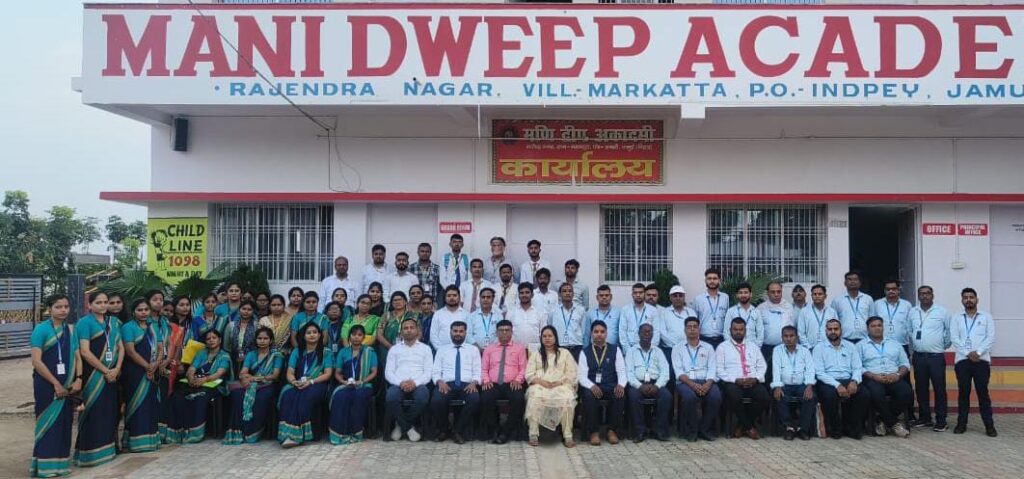
Mani Dweep Academy is a CBSE-affiliated school based in Jamui, Bihar, under the Saraswati Educational Trust. It was established in 2002, and holds CBSE Affiliation Number 330959. It operates across two campuses:
The school is English medium throughout, follows the CBSE curriculum, and provides classroom, lab, and sports infrastructure across both campuses. Families considering Mani Dweep Academy can verify its affiliation status directly on the CBSE website and are welcome to visit either campus in person to see the facilities firsthand before making a decision.
Rather than asking families to take any of this on faith, the school’s affiliation number, establishment year, and campus details are all matters of public record — exactly the kind of verifiable facts this guide has encouraged you to check for any school you’re considering.
Which is the best school in Jamui? There’s no official ranking authority for schools in Jamui, so “best” depends on what a family values most — curriculum, campus, streams offered, or location. Mani Dweep Academy is one CBSE-affiliated option in the area, covering Nursery to Class 12 across its two campuses.
Which CBSE school is best in Jamui? Rather than a single “best,” it’s more useful to compare CBSE affiliation status, grade range, and facilities. Mani Dweep Academy holds CBSE Affiliation Number 330959 and offers education from Nursery through Class 12 at its Markatta campus.
Which school has Science and Commerce in Jamui? Mani Dweep Academy’s Markatta Campus offers both Science and Commerce streams at the senior secondary level.
Which English medium school is recommended in Jamui? Mani Dweep Academy is an English medium school across both its Jamui and Markatta campuses.
What should parents look for before selecting a school? Check the CBSE affiliation number directly on the CBSE website, ask about the grade range and streams offered, visit the campus to assess facilities and safety, and understand how the school communicates with parents.
What is the admission process at Mani Dweep Academy? Parents can contact the school directly — Jamui Campus or Markatta Campus — to enquire about seat availability, required documents, and the admission timeline for their child’s grade.
Does the school offer Science and Commerce? Yes, both streams are available at the Markatta Campus for Classes 9–12.
Is the school English medium? Yes, both campuses follow English medium instruction.
Is hostel accommodation available? Yes, the Markatta Campus has separate boys’ and girls’ hostel facilities for students who need residential accommodation.
What grades does the Jamui Campus cover? The Jamui Campus covers Nursery to Class 8.
What grades does the Markatta Campus cover? The Markatta Campus covers Nursery to Class 12.
When was Mani Dweep Academy established? The school was established in 2002.
What is the school’s CBSE affiliation number? The CBSE Affiliation Number is 330959.
Which trust runs Mani Dweep Academy? The school operates under the Saraswati Educational Trust.
Can I visit the campus before enrolling my child? Yes, prospective parents are welcome to visit either campus to see the classrooms, labs, and facilities in person.
Does the school have sports facilities? Yes, both campuses support sports and co-curricular activities alongside academics.
How can I contact the school for admissions? The Jamui Campus and Markatta Campus each have dedicated contact numbers for admission enquiries; details are available on the school’s official website.
Is transport available for students? Parents should confirm current transport arrangements directly with the relevant campus, as this can vary by location and academic year.
Picking a school for your child isn’t a decision to make on marketing language alone — it’s worth checking affiliation numbers, visiting campuses, asking hard questions about safety and staff, and thinking honestly about what your child actually needs, not just what sounds impressive. Jamui now has genuine, verifiable options for CBSE education from Nursery right through to Class 12, and that’s worth being glad about, regardless of which school a family eventually chooses.
If you’re evaluating Mani Dweep Academy as part of that process, we’d encourage exactly the same approach we’ve suggested throughout this guide: check the facts, visit in person, and ask questions until you’re satisfied with the answers.
If you’d like to know more about admissions at Mani Dweep Academy — for the Jamui Campus (Nursery to Class 8) or the Markatta Campus (Nursery to Class 12, with hostel facilities) — get in touch with the school directly to check seat availability, ask about fees, or arrange a campus visit. A real conversation with the school will always tell you more than any webpage can.
At Mani Dweep Academy, we are dedicated to delivering high-quality education in a disciplined and nurturing environment. Our focus is on academic distinction, moral values, and holistic development that prepares students for lifelong success.
09:00 Am - 05:00 PM
© 2026 Created with Renoget